Give Better Feedback at Work With AI Drafting Support

Speak Clearly, Be Heard: Build Better Feedback with AI Support
Feedback lands best when it’s clear, specific, and actionable—without sounding harsh or vague. Whether it’s a quick note to a teammate, a tough conversation with a direct report, or a client-facing message that needs extra care, the same challenge shows up: people can’t act on what they don’t understand. This digital guide focuses on practical feedback skills you can use at work, in teams, and in everyday conversations, with optional AI assistance to help draft, refine, and tailor messages to different situations.
Why feedback gets misunderstood (and how to fix the common causes)
Most feedback failures aren’t about “not caring”—they’re about missing specifics, mixed signals, or a delivery moment that makes action harder. A few common causes show up again and again.
Vagueness
General statements (“be more proactive”) can feel frustrating because they don’t point to an observable change. Replace labels with examples: what happened, what was missing, and what “good” looks like next time.
Emotional spillover
When frustration builds, feedback can drift from the situation into assumptions about intent or character. Keep it grounded: describe the behavior, not the person, and let the other party share context before conclusions harden.
Timing problems
Feedback is most useful when the other person can still act on it. If the moment is too late, it turns into a recap. If the moment is too hot, it turns into a fight. Aim for “soon and calm,” then pick a time that supports problem-solving.
Mismatch in channel and tone
A long, formal message in chat can read as severe. A casual one-liner in email can read as dismissive. Match the channel and tone to the relationship, urgency, and stakes—especially when written feedback can’t rely on vocal nuance.
One-way delivery
Feedback that doesn’t invite clarification becomes a monologue. Make room for dialogue and end with an agreed next step so both people leave with the same plan.
A simple structure for feedback that stays respectful and direct
A consistent structure reduces anxiety for both sides. It also keeps the message focused on action—without softening it into vagueness.
- Start with context: what happened, when, and where (facts first).
- Name the impact: the cost, risk, delay, or benefit tied to the behavior.
- Offer a clear request: what to do differently next time (one change at a time).
- Invite response: ask for their perspective and confirm agreement on the next step.
- Close with support: offer resources, examples, or a quick check-in date.
Feedback Structure at a Glance
| Step | What to say | Keep it effective by |
|---|---|---|
| Context | “In yesterday’s client call…” | Sticking to observable facts |
| Behavior | “When the timeline changed, the update wasn’t shared…” | Describing actions, not personality |
| Impact | “That led to duplicated work and confusion…” | Connecting to outcomes the other person cares about |
| Request | “Please post the update in the project channel within 30 minutes.” | Being specific and measurable |
| Dialogue | “Is anything blocking you from doing that?” | Listening and removing obstacles |
| Follow-up | “Let’s check in next Friday.” | Making accountability normal, not punitive |
How AI assistance can strengthen feedback without sounding robotic
AI works best as a drafting partner—not a personality replacement. Used thoughtfully, it can help you get to “clear and respectful” faster, then you bring the real-world details that make the message credible.
- Drafting: turn bullet notes into a coherent, neutral message you can edit.
- Tone control: generate friendly, firm, formal, or ultra-concise versions, then choose what fits the relationship.
- Clarity checks: spot ambiguity, loaded phrasing, or missing context that could be misread.
- Audience adaptation: adjust wording for peers, managers, direct reports, or clients without changing the core point.
- Risk reduction: remove personal attacks, absolutes (“always/never”), and unclear demands.
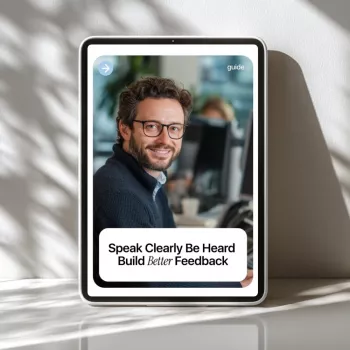
To deepen this skill with a repeatable framework, see Speak Clearly Be Heard Build Better Feedback – Digital Guide to Feedback Skills with AI Assistance.
Practical scenarios to practice: from minor fixes to hard conversations
Practice is what makes feedback feel natural. Try building a short message for each scenario using the same structure (context → behavior → impact → request → dialogue → follow-up).
Give feedback that motivates action (not defensiveness)
For evidence-based guidance on communication and feedback practices, see resources from Harvard Business Review, the Center for Creative Leadership, and the American Psychological Association.
What’s included in the digital guide and who it’s for
Explore the full resource here: Speak Clearly Be Heard Build Better Feedback – Digital Guide to Feedback Skills with AI Assistance.
Related tools that pair well with feedback practice
- AI Tips to Elevate Your Writing Voice | Editable Writing Tone Checklist
- AI Newsletter Wizard – Ultimate Editable Checklist for Email Creators
FAQ
How can AI help improve feedback without making it sound scripted?
Use AI to draft a neutral version and generate a couple tone options, then personalize it with real examples, a specific request, and a respectful closing that sounds like you. The final message should reflect your standards and your relationship with the other person.
What’s the best way to give feedback to someone who gets defensive?
Stick to observable facts, explain the impact, and propose one clear next step. Invite their perspective, then agree on a follow-up so the conversation ends with a shared plan instead of a debate.
Can this approach work for written messages like email or chat?
Yes—written feedback often improves when you keep it concise, follow a consistent structure, and run a quick clarity check for ambiguous or emotionally loaded phrasing. Choose a tone that matches the channel and the relationship.














Leave a comment