Montessori Cloth Sensory Book: Soft Animal Play
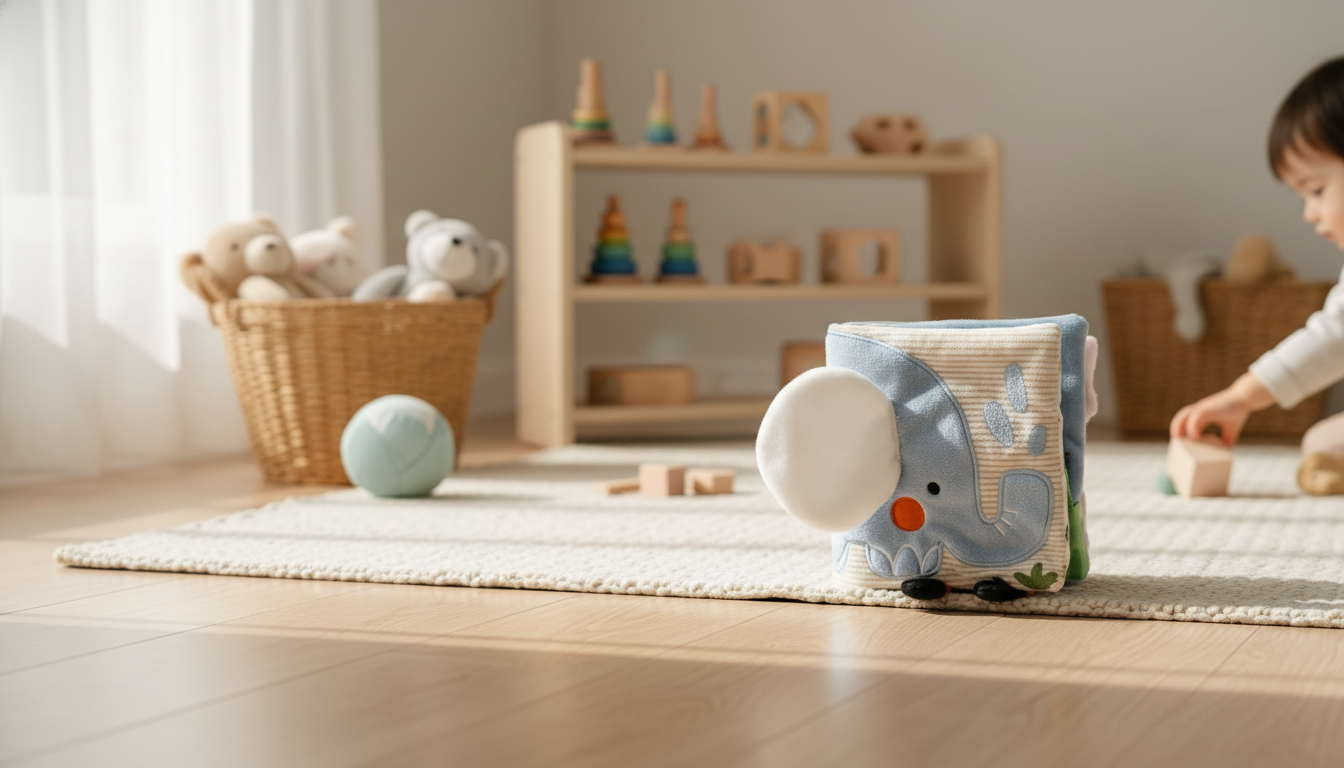
Montessori Cloth Sensory Books: Soft Animal Learning Toys for Early Discovery
A soft cloth sensory book with friendly animal themes can turn everyday moments—tummy time, stroller rides, and pre-nap wind-downs—into hands-on discovery. With textures, simple pictures, and interactive elements, this style of toy supports early sensory exploration and fine-motor practice while staying gentle for little hands. For more guidance, see [PDF] Massachusetts Early Learning Guidelines for Infants and Toddlers.
If you’re building a small, practical rotation of baby activities, a fabric book is an easy win: it’s quiet, portable, and engaging without relying on screens or batteries. Many families keep one within reach for those “in-between” minutes when baby wants to touch, crinkle, and explore. For further reading, see What Is Montessori at Home for Infants and Why Is It So Effective?.
What makes a cloth sensory book engaging for babies
Babies learn best through repetition and simple, tactile experiences. A well-made cloth book keeps their attention by combining easy-to-hold pages with playful details that invite tiny hands to do something purposeful.
- Soft, flexible pages that are easy to grasp, scrunch, and turn—even before baby can manage cardboard pages.
- Animal pictures that invite naming, pointing, and simple “find it” games as baby’s attention grows.
- Tactile features (textures, crinkles, flaps, and tags) that encourage exploration through touch and cause-and-effect play.
- Lightweight design that works at home, in the stroller, or clipped to a diaper bag for quick entertainment.
For caregivers, the best part is how naturally a cloth book fits into daily routines: open to one page, talk about what you see, let baby feel the textures, and close it when they’ve had enough.
Key skills supported during early play
Cloth sensory books are simple by design, but they can support a surprising range of early skills—especially when grown-ups join for short, responsive play.
- Sensory learning: varied textures and gentle sounds help babies compare and notice differences (smooth vs. bumpy, quiet vs. crinkly).
- Fine-motor development: grabbing tags, lifting flaps, and turning pages builds finger and hand coordination.
- Early language: animal images make it easy to model simple words and sounds (names, colors, “soft,” “rough”).
- Attention and calm: brief, repeatable activities can help extend focus during quiet time.
Play ideas by age range
| Age range | Simple activities | What it practices |
|---|---|---|
| 0–3 months | Show one page at a time; trace textures with baby’s fingertips | Visual tracking, sensory exposure |
| 3–6 months | Offer the book to grasp; encourage reaching for tags | Grasping, bilateral coordination |
| 6–9 months | Play peek-a-boo with flaps; name animals and imitate sounds | Cause-and-effect, early language |
| 9–12+ months | Ask “Where is the ___?”; practice turning pages independently | Following simple prompts, fine-motor control |
For a helpful overview of typical skill timelines, the CDC’s baby development milestones can be a useful reference point for families.
Everyday ways to use the book
A cloth sensory book is most effective when it’s easy to grab and use for 2–10 minutes at a time. Think of it as a small, flexible tool you can rotate through the day.
- Tummy time companion: place it slightly to the side to encourage gentle head turning and reaching. Turning just one page can become a mini “goal.”
- Stroller or car-seat activity: keep one or two favorite pages available for short bursts of play while you’re out and about.
- Bedtime wind-down: choose calmer pages and repeat a simple routine (name, touch, close). Consistency is soothing.
- Sibling participation: older children can help name animals, make silly sounds, and guide “turn the page” practice without overwhelming baby.
What to look for in a soft baby learning toy
Not all fabric books are made the same. A few practical details can make the difference between a toy that’s briefly interesting and one that becomes a daily favorite.
- Comfortable fabrics plus securely attached interactive pieces (no scratchy edges or easily pulled seams).
- Easy cleaning based on the care instructions—especially if the book will be used during teething stages.
- Simple, high-contrast elements that are easier for young babies to notice and track.
- Right-size design for small hands: light enough to lift, not so bulky that page turning becomes frustrating.
For toy safety considerations, the American Academy of Pediatrics’ toy safety guidance is a solid place to start.
Safety and care reminders
Soft books are generally baby-friendly, but any toy with tags, flaps, or crinkle layers should be used thoughtfully—especially as babies get stronger and more curious.
A practical gift for baby showers and first birthdays
In-stock picks
- Montessori Cloth Sensory Book for Infants – Soft Animal Learning Toys ($9.67)
- AI Tips to Elevate Your Writing Voice | Editable Writing Tone Checklist | Digital Download for Writers & Creators | ai tips for improving writing tone | Tone & Style Guide ($4.99)
FAQ
What age is a cloth sensory book suitable for?
Most cloth sensory books can be introduced from newborn days with simple, supervised “look and touch” play, and they stay useful through 12+ months as babies begin turning pages, lifting flaps, and responding to simple prompts.
How should a fabric baby book be cleaned?
Follow the product’s care instructions; many fabric books can be spot-cleaned or gently washed. Make sure the book fully dries before giving it back to baby.
How can caregivers use an animal sensory book to support language?
Name the animals, point to pictures, and repeat simple phrases like “soft bear” or “crinkle page.” As baby gets older, add animal sounds and prompts such as “Where is the duck?” to encourage understanding.















Leave a comment