Massage Gun Recovery for Athletes: Soreness & Mobility
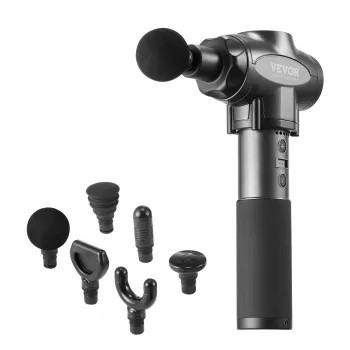
Deep Tissue Massage Gun for Athletes: Faster Recovery, Better Mobility, Less Soreness
Training hard is only half the equation—recovery determines how consistently the body can show up for the next session. A deep tissue massage gun can help athletes reduce post-workout soreness, improve short-term range of motion, and target stubborn tight spots in minutes, whether the goal is a better warm-up, a quicker cooldown, or day-to-day maintenance.
What a Deep Tissue Massage Gun Does (and Why Athletes Use It)
A massage gun delivers rapid, repeated pressure (percussion) into soft tissue. Many athletes use that input to ease the feeling of tightness, calm down “worked” muscles, and improve comfort when moving through a pattern like a squat, hinge, or overhead reach.
- Delivers fast, repeated pressure to soft tissue to help ease tightness and perceived muscle soreness after training.
- Common athlete use cases: post-lift quads/hamstrings, post-run calves/feet, overhead sports shoulders/scapular area, and general hip/glute tightness.
- Often used as part of a recovery stack alongside sleep, hydration, nutrition, and active recovery (walking, easy cycling, mobility work).
- Can be used pre-workout for short bouts to “wake up” muscles and improve comfort through a movement pattern.
Practical Ways Athletes Use a Massage Gun
| Goal | When to Use | Typical Duration | Suggested Areas |
|---|---|---|---|
| Warm-up prep | 5–10 minutes before training | 30–60 seconds per muscle group | Glutes, quads, calves, upper back |
| Cooldown recovery | Within a few hours after training | 1–2 minutes per area | Quads, hamstrings, calves, lats |
| Next-day stiffness | Morning or between sessions | 1–3 minutes per area | Hips, calves, thoracic spine (upper back) |
| Spot tightness | As needed | 15–30 seconds, reassess | Small areas around (not on) tender points |
For broader training and recovery principles, the American College of Sports Medicine (ACSM) is a reliable place to cross-check what matters most: consistent training, adequate rest, and smart progression.
How to Use It Safely and Effectively
The best results usually come from light-to-moderate pressure and a “less is more” approach. Think of it as a quick tool to improve comfort and movement quality, not something to aggressively grind into tissue.
- Start light: begin on a lower speed and lighter pressure; increase gradually based on comfort and tissue tolerance.
- Keep it moving: slow passes across the muscle typically feel better than holding long on one spot.
- Angle matters: approach the muscle belly flat and avoid digging into sharp angles near joints.
- Time guidelines: for most athletes, 30–120 seconds per muscle group is enough; longer is not always better.
- Avoid high-risk zones: do not use directly on the front/side of the neck, spine, bony areas, or directly over joints.
- Stop if symptoms are wrong: sharp pain, tingling, numbness, or pain that worsens after use is a sign to discontinue and reassess.
If you’re unsure whether it’s appropriate for a medical condition, a safety overview from the Cleveland Clinic can help clarify when massage techniques may be risky and when it’s better to ask a professional first.
Choosing Settings and Attachments for Common Sports Areas
Attachments and speeds are less about “harder is better” and more about matching the shape and sensitivity of an area. When in doubt, go softer and slower, then build up only if the tissue tolerates it well.
- Large muscle groups (quads, glutes, hamstrings): use a broader head and moderate speed; focus on long strokes from proximal to distal (hip toward knee).
- Calves and shins: keep pressure moderate; calves tolerate more than the front of the shin—avoid direct work on the tibia.
- Upper back and lats: use moderate speed; keep off the spine and shoulder joint; target the muscle mass beside the spine and under the shoulder blade region (without forcing into bone).
- Feet: a softer head can be more comfortable; avoid aggressive pressure on the arch if it provokes sharp pain.
- Sensitive areas: lower speed and a softer attachment often provide adequate relief without excessive soreness.
A Simple Athlete Routine: Pre-Workout + Post-Workout
Instead of long, exhausting sessions, aim for quick, repeatable routines that fit your week. Most athletes notice the biggest benefit when the massage gun supports movement prep and helps them downshift after training.
When to Skip It (or Check With a Professional)
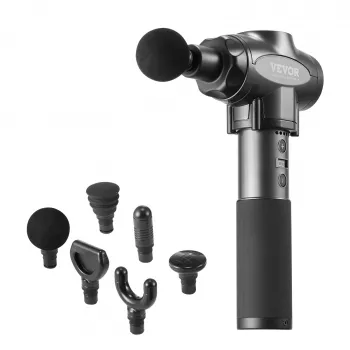
Deep Tissue Massage Gun for Athletes (Product Highlights)
Deep Tissue Massage Gun for Athletes
- Wireless Silver Gaming Controller with Charging Dock for Switch, PC & iPad
- AI Tips to Elevate Your Writing Voice | Editable Writing Tone Checklist (Digital Download)
- AI Newsletter Wizard – Ultimate Editable Checklist (Digital Download)
FAQ
How long should athletes use a massage gun on one muscle?
A practical range is 30–120 seconds per muscle group, starting at the shorter end and reassessing how the area feels during movement. More time and more pressure aren’t automatically better—back off if it increases soreness later.
Is it better to use a massage gun before or after a workout?
Before training, brief use (about 30–60 seconds per area) can improve comfort and readiness; after training, a slightly longer session (60–90 seconds per main muscle groups) can help you relax and manage perceived soreness. A simple approach is 4–5 minutes pre-workout plus 8–12 minutes post-workout.
Can a massage gun help with delayed onset muscle soreness (DOMS)?
It can reduce perceived soreness for some athletes and improve short-term comfort, which may make it easier to move the next day. It’s not a cure-all—sleep, nutrition, hydration, and light movement still do most of the heavy lifting for recovery.












Leave a comment